
The road to
your front door.
Every step of buying a home, in order — from your first mortgage conversation to the day the keys land in your hand. One road, ten stops, no jargon and no surprises.
You’ve seen a home
you like. Now what?
I act for the seller — but a sale only completes when the buyer is looked after too. Most people buy a home two or three times in a lifetime, and nobody hands you the manual. So this is it.
The whole journey is one road with ten stops. Some you may skip — a cash buyer drives straight past the mortgage stops — but the order never changes, and knowing what comes next is what keeps the stress down.
Keep this pack. When you are somewhere on the road and it goes quiet, open the page you are on and you will see exactly what is happening behind the scenes — and whose desk it is sitting on.
“Nobody buys a house every day. I do this every day — so ask me anything, at any stop.”

Stops 01 and 05 are yours. Pages 08–09 cover mortgages properly, with the advisers I recommend — Nexpad.

A typical journey from accepted offer to keys is 10–14 weeks. The road starts on the next page and runs, without stopping, to the end.

Mortgage in principle.
If you need a mortgageBefore you fall in love with anything, find out what a lender would actually give you. A mortgage in principle — you will also hear “agreement in principle” or “decision in principle”, all the same thing — is a lender’s statement of roughly what they would lend you, based on a few questions and a soft credit check.
It is free, it usually takes under an hour with a broker, and the soft check does not mark your credit file. It is not a guarantee — that comes at stop 05 — but it sets your true budget: deposit plus loan, minus the costs on page 09.
It also changes how you are treated. When you offer with one in hand, the agent knows you are real. When two offers are close, the one with paperwork behind it wins.
Viewings — finding the one.
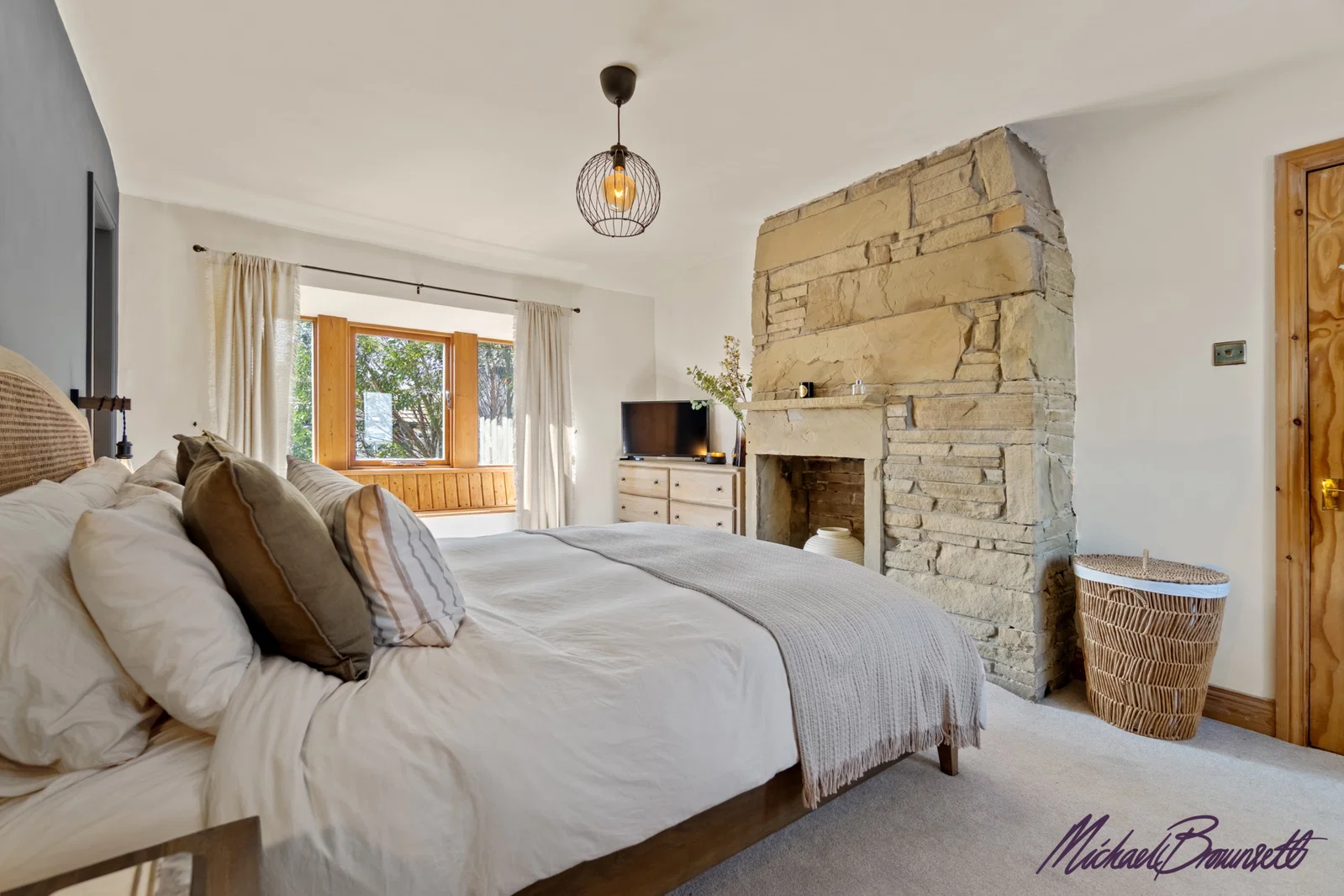
On my listings you view with me, not a rota. Take your time, open the cupboards, ask the awkward questions — boiler age, council tax band, what the neighbours are like, why the sellers are moving. I would rather you ask now than wobble later.
If a home is close to right, come back. Second viewings are free and encouraged — bring the person whose opinion you trust, come at a different time of day, walk the street, do the school run or the commute. A house you love at 11am on a Saturday should still make sense at 5:30pm on a Tuesday.
“Buy the house, the street and the light. Paint colours cost £40.”

Making your offer.
Offers go to the agent, not the seller — ring me or put it in writing. A strong offer is more than a number. Tell me your position: mortgage in principle or proof of funds, your deposit, whether you have a property to sell, and whether your conveyancer is already lined up.
A chain-free buyer at £5,000 under can beat a long chain at full asking. Sellers buy certainty as much as price — show yours.
Negotiation is normal. Be honest about your ceiling and your position — I verify both before anything is agreed.
Accepted — sold subject to contract.
Congratulations — and a plain word of truth: nothing is legally binding yet, for either side, until exchange at stop 09. What happens now is paperwork with pace. I confirm the sale in writing to both sides and issue the memorandum of sale to both conveyancers, and the listing comes off the market.
The first fortnight sets the tone for the whole purchase. Your three jobs this week: instruct your conveyancer (stop 06), start the full mortgage application (stop 05), and get your documents in one folder. Fast starts finish fast.

The full mortgage application.
If you need a mortgageYour in-principle now becomes a real application against a real address. Your broker submits it, the lender underwrites you properly — payslips, statements, credit history — and instructs a valuation of the property. A formal mortgage offer typically lands in two to four weeks.
Until your offer arrives, protect it. No new car finance, no new credit cards, no job changes if you can help it, and no large unexplained sums in or out of your accounts. Lenders re-check right up to completion.
Nexpad handle this whole stop for my buyers — application, documents, lender chasing — and keep me in the loop so nobody is guessing. Pages 08–09.
Instructing a conveyancer.
Your conveyancer is the solicitor who does the legal transfer: checks the title, orders the searches, raises enquiries, exchanges contracts and moves the money. You cannot buy a house without one, and the single biggest cause of slow purchases is a slow start here.
Choose on responsiveness, not just price. The cheapest quote on a comparison site is often a case-number factory that answers nobody. Ask two questions before you instruct: who exactly is handling my file, and how do I reach them?
Instruct on day one, complete their ID checks the day the pack arrives, and pay for searches upfront so they are ordered immediately — they take weeks to come back, so every day they are not ordered is a day on your completion date.
Survey & valuation.
Two different things, often confused. The valuation is for the lender — a quick check that the house is worth the loan. It protects the bank, not you. A survey is yours: a qualified surveyor inspecting the condition of the biggest purchase of your life.
A Level 2 HomeBuyer Report suits most conventional homes; a Level 3 Building Survey is worth it for older, extended or unusual properties. Every survey ever written flags something — damp readings, flat roofs, old wiring. Most of it is normal for the age of the house. Read it with the surveyor on the phone, then talk to me before panicking: genuine issues can be renegotiated or fixed.

Searches & enquiries.
The longest stretch of road, and the quietest. Your conveyancer waits on three searches — local authority, drainage & water, environmental — then raises written enquiries on the seller’s contract pack: boundaries, guarantees, building regs for that extension. The seller’s side answers; yours checks the answers.
Weeks three to eight usually live here. Quiet does not mean stalled — it means documents are sitting in queues. On my sales I chase every party every week and report back, so you always know whose desk it is on.
“In the quiet weeks, no news is usually just a queue — not a problem.”

Exchange of contracts.
The moment everything becomes real. Enquiries are satisfied, your mortgage offer is in, you sign the contract, your deposit — usually 10% — moves to your solicitor, and the two solicitors formally exchange. From that second the sale is legally binding both ways, and the completion date is fixed in the contract.
Now — and only now — book the removals van, hand in notice on your rental, and arrange buildings insurance on the new house from exchange day, because from exchange the risk is typically yours. Exchange to completion is commonly one to two weeks; same-day is possible.
“Nothing is certain until exchange. After exchange, nothing is uncertain.”
Completion — the keys.
On the morning of completion your lender releases the money to your solicitor, who sends it up the chain. The moment it lands with the seller’s solicitor, the keys are released — on a Brownsett sale, from me, handed over personally. There is no fixed time; most completions land between late morning and mid-afternoon, and I keep you posted through the day.
Take meter readings and photos on day one, find the stopcock before you need it, and change the locks — you never know how many keys are out there. Then put the kettle on. You are home.
Mortgages, with Nexpad.
You are free to use any broker, or go straight to your own bank. I recommend Nexpad because of how they work: clear, regulated mortgage and protection advice, tailored to your circumstances, with fees confirmed in writing up front — and because they work hand in hand with eXp UK agents like me, so your agent and your adviser are never two strangers guessing at each other’s progress.
“I founded Nexpad after 25 years in mortgage advice, with a clear purpose: to connect estate agents and mortgage advisers more effectively, so customers feel better supported throughout their home-moving journey.”
UK-wide by phone and video, in person where appropriate. If you need extra support — health, bereavement, accessibility, money worries — tell them and they will adapt how they work with you.
High street banks, building societies and specialist lenders. Advice from a broad panel means the recommendation fits your circumstances — not whichever single provider happens to employ the adviser.
Six steps, start to finish.
More complex cases can be up to £999. Either way, the exact amount is confirmed in writing before you choose to proceed — no surprises.
Mention you are buying through Brownsett — they will keep me in the loop at every stop, with your permission.

Your home may be repossessed if you do not keep up repayments on your mortgage. Think carefully before securing other debts against your home. Nexpad advises from a selected panel of lenders and insurers; this is not the whole of market. Not all buy-to-let mortgages are regulated by the Financial Conduct Authority. Nexpad is a trading style of Nexpad Mortgages Limited, registered in England & Wales, company number 16942809, an appointed representative of HL Partnership Limited, authorised and regulated by the Financial Conduct Authority.
Surveys: the four levels.
You will hear all four of these called “the survey”. They are very different things. The first happens automatically if you are borrowing; the other three are optional, paid for by you, and work entirely for your benefit — you choose one at stop 07 on your road.
Happens automatically at stop 05: the lender checks the house is worth the loan. Often a desktop exercise or a brief visit, and you may never see more than a figure. It is not a condition check — it protects the bank, not you. Never rely on it as a survey.
A traffic-light snapshot of visible condition — no advice, no repair detail, no valuation. The lightest look a surveyor will put their name to, for homes that look after themselves.
The popular choice: condition plus advice. Damp, roof, services and timbers, with defects that affect value and the maintenance they need. A market valuation can be added if you want one.
The deep dive: a thorough structural inspection covering defects, their causes, repair options and likely costs. The one I push for whenever a house has age, alterations or character.
“My rule of thumb: pre-1930s, extended or anything quirky — Level 3. Anything else, Level 1 and sleep easy.”
What it costs, and what it means.
Typical figures to plan with, not quotes. Your conveyancer and broker will confirm exact costs in writing.

My fee is paid by the seller, never the buyer. There is no charge for viewings, for offering, or for the sale progression I do on your purchase. If anyone asks a buyer for a fee to “secure” a property, walk away and ring me.
“If a word on a letter makes no sense, ring me and I will translate it. That is not a silly question — it is the system being silly.”

Whether you are buying one of my listings or just starting to look, any question at all — an offer, a survey, a solicitor’s letter — ring me. There is no such thing as bothering me.
“Not every agent. The right agent for your home.”